Local AI Models vs ChatGPT: A Real-World Comparison
We run both local models and cloud AI daily. Here's an honest, side-by-side comparison of DeepSeek, Llama, and Mistral running locally vs GPT-4 and Claude in the cloud — speed, quality, cost, and when each makes sense.
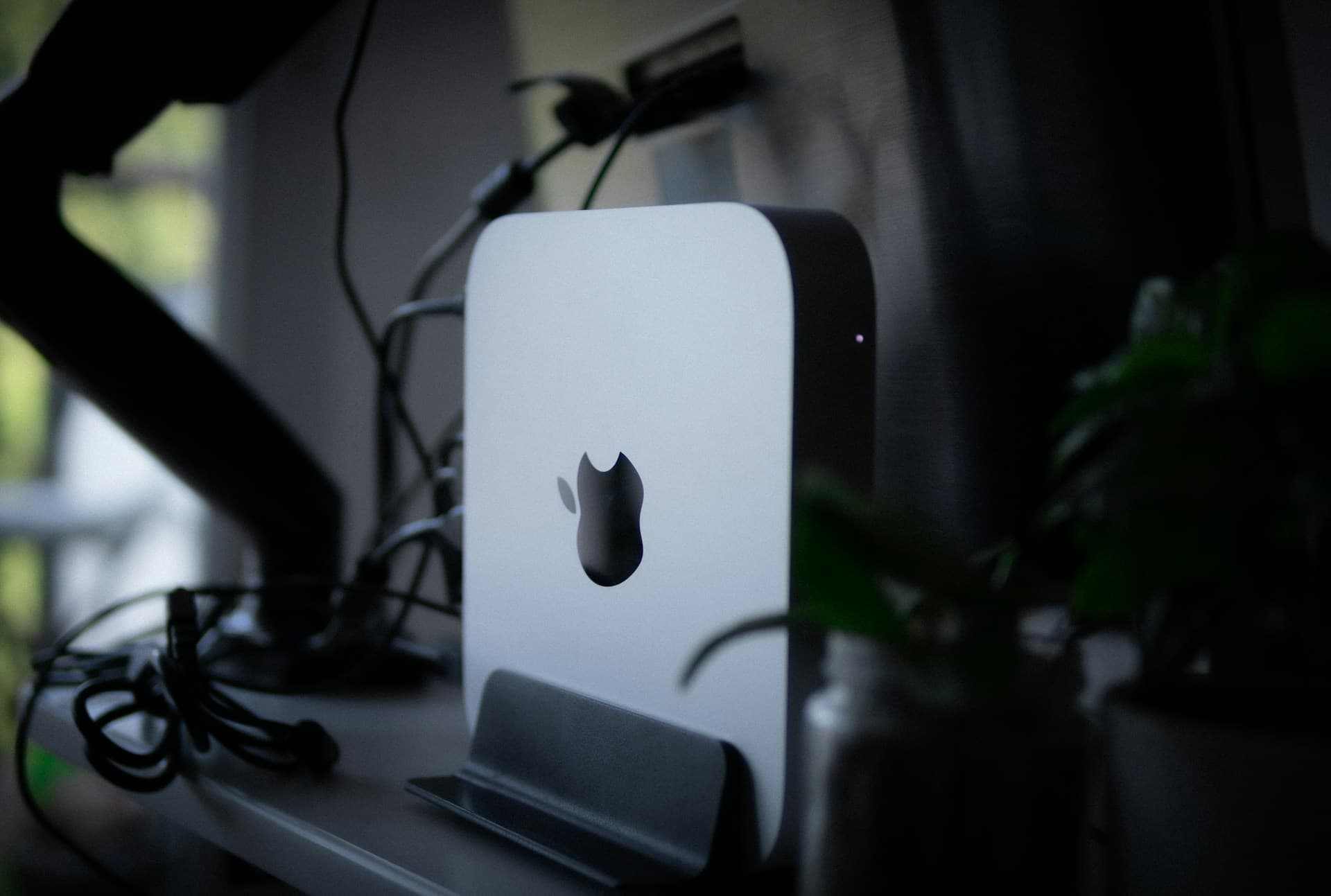
We deploy private AI systems that run local models on Mac Mini hardware. We also use GPT-4 and Claude daily for our own work. We're not ideologically committed to either approach — we use both because they're good at different things.
Here's an honest comparison based on real-world usage, not benchmarks or marketing claims.
The models we're comparing
Local models (running on Mac Mini M4 Pro, 48GB unified memory):
- DeepSeek-R1 32B (quantized)
- Llama 3.1 70B (quantized)
- Mistral Large (quantized)
- Qwen 2.5 32B
Cloud models:
- GPT-4o (OpenAI)
- Claude 3.5 Sonnet (Anthropic)
All local models run via Ollama. Quantization reduces model size to fit in 48GB of memory with acceptable quality tradeoff.
Task-by-task comparison
Contract clause analysis
Cloud AI: Excellent. GPT-4 and Claude both handle complex contract analysis well. They identify risk clauses, compare against standard terms, and generate thorough summaries.
Local AI (DeepSeek-R1 32B): Very good. Catches the same major issues. Occasionally misses nuanced implications that Claude catches. For routine contract review — which is 90% of contract review — the quality difference is negligible. For a complex M&A agreement with unusual structures, cloud models have an edge.
Verdict: Local AI handles the daily volume. Cloud AI for the outlier cases. This is exactly what hybrid routing does automatically.
Document summarization
Cloud AI: Excellent across the board. Handles long documents, maintains context, and produces well-structured summaries.
Local AI (Llama 3.1 70B): Very good. Summaries are accurate and well-organized. Slightly less polished writing style compared to Claude. For a 20-page document, the practical quality difference is minimal. For a 100-page document, cloud models maintain coherence better over very long contexts.
Verdict: Effectively equivalent for typical business document lengths (under 30 pages). Cloud AI for very long documents.
Data extraction (structured)
Cloud AI: Excellent. Extracts names, dates, dollar amounts, and structured fields with high accuracy.
Local AI (DeepSeek or Qwen): Very good to excellent. This is actually one of the strongest use cases for local models. Extracting structured data from forms, contracts, and documents — the kind of task that client intake and document processing requires — performs nearly identically to cloud models.
Verdict: Effectively equal. This is where private AI really shines — the task most regulated businesses need (extracting and organizing client data) is a task local models do very well.
General research and reasoning
Cloud AI: Excellent. This is where cloud models have the clearest advantage. GPT-4 and Claude have broader knowledge, handle complex multi-step reasoning better, and produce more nuanced analysis on open-ended questions.
Local AI: Good to very good. Adequate for focused, domain-specific research. Not as strong for broad, open-ended analysis or questions requiring synthesis across many different knowledge domains.
Verdict: Cloud AI is meaningfully better for general research. This is why hybrid routing sends non-sensitive research queries to cloud models.
Creative writing and drafting
Cloud AI: Excellent. Claude in particular produces high-quality, natural-sounding prose.
Local AI: Moderate to good. Drafts are serviceable and accurate but less polished. For client-facing documents that need to sound professional and natural, cloud models produce better first drafts. For internal documents, memos, and structured outputs, local models are adequate.
Verdict: Cloud AI for client-facing prose. Local AI for internal and structured documents. Hybrid routing handles this automatically.
Code generation
Cloud AI: Excellent. Both GPT-4 and Claude are strong code generators across many languages.
Local AI (DeepSeek): Good to very good. DeepSeek in particular is competitive with cloud models for common programming tasks. For specialized or complex code generation, cloud models have an edge.
Verdict: Closer than you'd expect. For most business automation code, local models are sufficient.
Speed comparison
| Task | Cloud AI | Local AI (M4 Pro 48GB) |
|---|---|---|
| Short query (< 100 words) | 1-3 seconds | 2-5 seconds |
| Document summary (10 pages) | 5-15 seconds | 10-30 seconds |
| Contract analysis (20 pages) | 10-30 seconds | 20-60 seconds |
| Data extraction (form) | 2-5 seconds | 3-8 seconds |
Local models are slower. For most business use cases, the difference is seconds — noticeable but not workflow-breaking. The user who waited 90 minutes for manual contract review isn't going to complain about 60 seconds of AI processing.
Cost comparison
Cloud AI costs (per user, per month)
| Plan | Monthly cost | Notes |
|---|---|---|
| ChatGPT Plus | $20/user | Consumer tier, limited usage |
| ChatGPT Team | $25-30/user | Better data handling, still cloud |
| Claude Pro | $20/user | Usage caps apply |
| API usage (moderate) | $50-200/month | Variable based on volume |
For a 10-person team: $200-$3,000/month in cloud AI subscriptions — and your data still goes to their servers.
Private AI costs
| Component | Cost |
|---|---|
| Mac Mini M4 Pro (one-time) | ~$1,700 |
| Deployment and configuration | Starting at $18,000 |
| Monthly managed services | $2,997/mo |
| Cloud AI API budget (hybrid routing) | $50-300/mo |
| Monthly ongoing cost | ~$3,297/mo |
The private deployment costs more than cloud subscriptions alone. But it includes the hardware, the configuration, the security hardening, the managed services, and the critical benefit: your sensitive data never leaves your building.
When local AI is the right choice
- Privileged data: Attorney-client privileged communications, work product
- Regulated data: PHI under HIPAA, CUI under CMMC, data under SEC/FINRA regulations
- Competitively sensitive data: Bid pricing, proprietary processes, client lists
- Contractually restricted data: Information under NDAs with specific handling requirements
- Data you can't afford to expose: Anything where the cost of a breach exceeds the cost of local processing
When cloud AI is the right choice
- Non-sensitive research: General knowledge queries, public information
- Creative work: Marketing copy, blog drafts, social media content
- Complex reasoning: Multi-step analysis requiring broad knowledge synthesis
- Non-client work: Internal processes, general business administration
The hybrid answer
The best deployments use both. Not because compromise is always right, but because different data types genuinely have different requirements.
A managing partner researching case law on a public legal database? Cloud AI gives better results. That same managing partner reviewing a privileged client contract? Local AI keeps it safe.
The hybrid routing layer in a private deployment handles this automatically. The user interacts with one portal. The system classifies each request and routes it to the right model. Sensitive data stays on local hardware. Everything else uses the best available cloud model.
That's not a compromise. That's the optimal architecture for any business handling sensitive data.
The trajectory
One more thing worth noting: local models are improving faster than cloud models. A year ago, running a capable AI model on a Mac Mini was barely feasible. Today, quantized 32B and 70B parameter models deliver quality that's genuinely competitive with last year's cloud models — and next year's local models will close the gap further.
The investment in local AI infrastructure is an investment in a technology trajectory that's rapidly converging with cloud capability, while permanently solving the data residency problem.
Book a 15-minute call to discuss what a hybrid private AI deployment would look like for your organization. We'll walk through the specific models and routing architecture for your use cases.
Related: On-Premise vs Cloud AI: What Regulated Businesses Need to Know | Private AI for Law Firms
Want to see what AI can do for your business?
Book a free 15-minute call. We'll tell you exactly what's automatable — and what isn't.
Schedule a 15-Minute Fit Call